
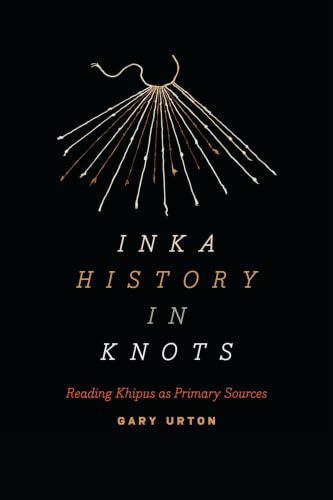
Inka history in knots : reading khipus as primary sources /Gary Urton
Material type: TextPublisher number: International Book Distributors | ;Flat No.17,Prakash Apartments,5 Ansari Road,Daryaganj New Delhi-110002Series: Joe R. and Teresa Lozano Long series in Latin American and Latino art and culturePublication details: Austin, TX : University of Texas Press , 2017.Description: xvii, 293 pages, 8 unnumbered pages of plates : illustrations (some color), maps ; 23 cmISBN:
- 9781477311998
- 985.01 URT
| Item type | Current library | Call number | Status | Barcode | |
|---|---|---|---|---|---|
 Books |
SNU LIBRARY | 985.01 URT (Browse shelf(Opens below)) | Available | 26022 |
Part I. Background. What can we learn about the Inkas from study of the khipus? --
A brief introduction to Tawantinsuyu : the Inka empire --
Part II. Reading khipus in social, political, and religious registers. Cord notes for describing an Inka-era village on the southern coast of Peru --
The ancestors' calendar : Laguna de los Cóndores, Chachapoyas, northern Peru --
Constructing the records of the Palace of Puruchuco, Lima Valley --
Accounting for the Oracle : record keeping at Pachacamac, Lurín Valley --
The iconography of inebriation : engraved and sculpted khipu bars --
Part III. Imperial accounting. What did the ceque khipus look like? --
Accounting in the king's storehouse : Inkawasi, southern coast of Peru --
Counting heads in Tawantinsuyu --
Part IV. Colonial khipus. Accounting for demographic collapse? --
Khipus from a colonial "revisit" to the Santa Valley : the "rosetta khipu"? --
Part V. Summary and conclusions. Structure and history in the khipus --
Appendix. A khipu inventory.
Inka khipus--spun and plied cords that record information through intricate patterns of knots and colors--constitute the only available primary sources on the Inka empire not mediated by the hands, minds, and motives of the conquering Europeans. As such, they offer direct insight into the worldview of the Inka--a view that differs from European thought as much as khipus differ from alphabetic writing, which the Inka did not possess. Scholars have spent decades attempting to decipher the Inka khipus, and Gary Urton has become the world's leading authority on these artifacts. In Inka History in Knots, Urton marshals a lifetime of study to offer a grand overview of the types of quantative information recorded in khipus and to show how these records can be used as primary sources for an Inka history of the empire that focuses on statistics, demography, and the "longue duree" social processes that characterize a civilization continuously adapting to and exploiting its environment. Whether the Inka khipu keepers were registering census data, recording tribute, or performing many other administrative tasks, Urton asserts that they were key players in the organization and control of subject populations throughout the empire and that khipu record-keeping vitally contributed to the emergence of political complexity in the Andes. This new view of the importance of khipus promises to fundamentally reorient our understanding of the development of the Inka state and the possibilities for writing its history.
There are no comments on this title.
