
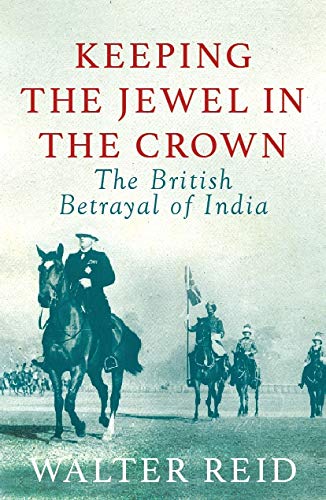
Keeping the Jewel in the Crown ;the British betrayal of India / Walter Reid
Material type: TextPublisher number: :International Book Distributors | :Flat No 17, Prakash Apartment 4405/2, 5 Ansari Road Darya Ganj New Delhi Publication details: Haryana :Penguin Books ©2016Description: x, 288p 16 unnumbered pages of plates : illustrations, maps 22cmISBN:
- 9780143449140
- 954.035 REI
| Item type | Current library | Call number | Status | Barcode | |
|---|---|---|---|---|---|
 Books |
SNU LIBRARY | 954.035 REI (Browse shelf(Opens below)) | Not For Loan | 28807 |
Political framework. Introduction --
The back story --
The Morley-Minto reforms --
The impact of the First World War --
The Montagu-Chelmsford reforms --
Gandhi --
Amritsar --
Rufus Isaacs, First Marquess of Reading --
British politics between the wars --
Lord Irwin --
F.E. Smith and the Simon Commission --
Empire, dominions and Commonwealth --
The Irwin Declaration --
Simon and Irwin collide: the political reaction --
Reaction to the declaration in India --
The Gandhi-Irwin Pact --
The Round-table conferences --
Willingdon --
Looking behind Churchill's words --
The background to the India bill: Civil War in the Conservative Party --
Churchill and the Privileges Committee --
The legislation --
After the Act --
Rab Butler --
Linlithgow: a new viceroy for the new Act --
Indian politics --
Policy and the war --
Amery --
Military developments --
Stafford Cripps --
Preparation for the Mission of 1942 --
Cripps in India --
Deadlock --
Failure of the Mission --
Quit India --
Government policy post-Cripps --
Wavell --
Wavell as viceroy --
The Simla Conference --
A new world --
India in 1945 --
The Cabinet mission --
After the failure of the mission --
The last viceroy --
Mountbatten's instructions --
The view from Whitehall --
The princely states --
The final plan --
Commonwealth and independence --
Endgame --
Conclusion.
"When India became independent in 1947, the general view, which has prevailed until now, is that Britain had been steadily working for an amicable transfer of power for decades. In this book Walter Reid argues that nothing could be further from the truth. With reference to a vast amount of documentary material, from private letters to public records and state papers, he shows how Britain held back political progress in India for as long as possible - a policy which led to unimaginable chaos and suffering when independence was granted, and which created a legacy of hatred and distrust that continues to this day"--Publisher description.
There are no comments on this title.
