
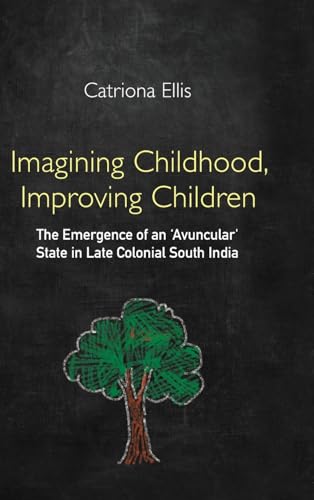
Imagining Childhood, Improving Children : The Emergence of an ‘Avuncular’ State in Late Colonial South India. /Catriona Ellis.
Material type: TextPublisher number: : Technical Bureau India | : 4794/23, 1st Floor, 7, Ansari Road, New DelhiPublication details: , New York : Cambridge University Press , 2023.Description: xi, 345p. : 24cmISBN:
- 9781009215206
- 155.4 ELL
| Item type | Current library | Call number | Status | Barcode | |
|---|---|---|---|---|---|
 Books |
SNU LIBRARY | 155.4 ELL (Browse shelf(Opens below)) | Available | 30490 |
From as early as the 1920s, state policy towards children in South India was framed through the lens of a universal ideal of modern childhood. This reflected the participation of policy makers and civil society activists in global discourses of child-saving and the new opportunities of governance under the constitutional reforms of 1919. Children became viewed as both objects to be saved and investments as future citizens. The book considers how adults used this concept of universal childhood to conceptualise themselves as both modern and avuncular, gaining authority through an appropriation of familial terms as well as the claim to modern, scientific expertise. Through a detailed study of education, health and juvenile justice, the book reveals that the implementation of policy was still informed by other markers of difference, and contrasts adult intentions with the autobiographical memories of school, family, and peer relationships.
There are no comments on this title.
