
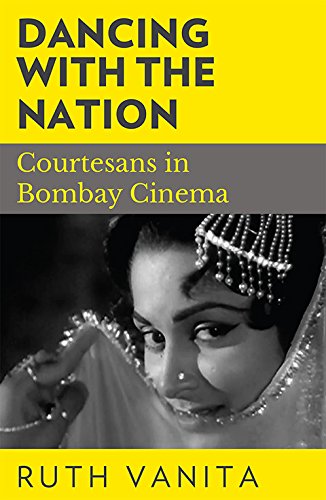
Dancing with the nation : courtesans in Bombay cinema. / Ruth Vanita.
Material type: TextPublisher number: : Savera Book Distributors | : 4754, Akarshan Bhawan, 23, Ansari Road, Darya Ganj, New DelhiPublication details: New Delhi : Speaking Tiger , 2017.Description: xv, 261p. : 24cmISBN:
- 9789386702906
- 792.78 VAN
| Item type | Current library | Call number | Status | Barcode | |
|---|---|---|---|---|---|
 Books |
SNU LIBRARY | 792.78 VAN (Browse shelf(Opens below)) | Not For Loan | 31545 |
Acknowledging courtesans or tawaifs as central to popular Hindi cinema, Dancing with the Nation is the first book to show how the figure of the courtesan shapes the Indian erotic, political and religious imagination. Historically, courtesans existed outside the conventional patriarchal family and carved a special place for themselves with their independent spirit, witty conversations and transmission of classical music and dance. Later, they entered the nascent world of Bombay cinema—as playback singers and actors, and as directors and producers. In Ruth Vanita’s study of over 200 films from the 1930s to the present—among them, Devdas(1935), Mehndi(1958),Teesri Kasam (1966), Pakeezah (1971), Ram Teri Ganga Maili (1985), Ahista Ahista (1981), Sangeet (1992) and Ishaqzaade (2012)—courtesan characters emerge as the first group of single, working women depicted in South Asian movies. Almost every female actor—from Waheeda Rahman to Rekha and Madhuri Dixit—has played the role, and compared to other central female roles, these characters have greater social and financial autonomy. They travel by themselves, choose the men they want to have relations with and form networks with chosen kin. And challenging received wisdom, in Vanita’s analysis of films such as The Burning Train (1980) and Mujhe Jeene Do (1963), courtesan characters emerge as representatives of India’s hybrid Hindu-Muslim culture rather than of Islamicate culture. A rigorously researched and groundbreaking account of one of the less-examined figures in the study of cinema, Dancing with the Nation is also a riveting study of gender, sexuality, the performing arts and popular culture in modern India.
There are no comments on this title.
