
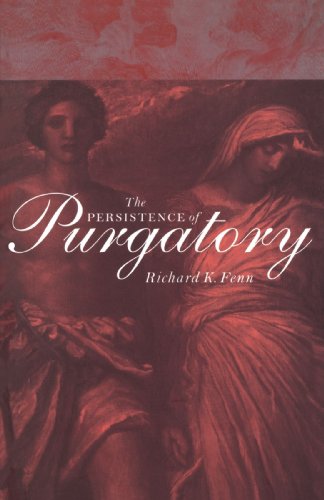
The Persistence of purgatory / Richard K. Fenn.
Material type: TextPublisher number: : Technical Bureau India Pvt. Ltd | : 4794/23, Ansari Road, DaryaGanj, New DelhiPublication details: , New York : Cambridge University Press , 1995.Description: viii, 206p. : 24cmISBN:
- 9780521568555
- 115 FEN
| Item type | Current library | Call number | Status | Barcode | |
|---|---|---|---|---|---|
 Books |
SNU LIBRARY | 115 FEN (Browse shelf(Opens below)) | Available | 31929 |
Why does Western civilization take time so seriously? While various scholars have traced the intensification of time in the West either to the Enlightenment or to the Protestant Ethic, the author traces Western attitudes toward time back to the doctrine and myth of Purgatory. As popular and theological understandings of Purgatory became increasingly secularized, the lifespan of the individual became correspondingly purgatorial. No time could be wasted. The author demonstrates the impact of Purgatory on the preaching of Richard Baxter and William Channing, but he also argues that John Locke's views can only be understood when placed within the context of a belief in Purgatory and the life everlasting. For observers such as Charles Dickens, America itself seemed to be a purgatorial wasteland full of lost and melancholy souls: a place where time is always of the essence.
There are no comments on this title.
