
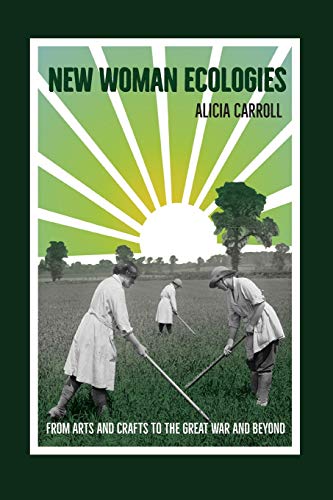
New Woman Ecologies : From Arts and Crafts to the Great War and Beyond. / Alicia Carroll.
Material type: TextPublisher number: : International Book Distributors | : Flat No. 17, Prakash Apartment, 4405/2, 5 Ansari Road, Daryaganj, New delhiPublication details: , Great Britain : University of Virginia Press , 2019.Description: xii, 242p. : 24cmISBN:
- 9780813942827
- 304.20CAR
| Item type | Current library | Call number | Status | Barcode | |
|---|---|---|---|---|---|
 Books |
SNU LIBRARY | 304.20 CAR (Browse shelf(Opens below)) | Available | 31965 |
A transatlantic phenomenon of the late nineteenth and early twentieth centuries, the "New Woman" broke away from many of the constraints of the Victorian era to enjoy a greater freedom of movement in the social, physical, and intellectual realms. As Alicia Carroll reveals, the New Woman also played a significant role in environmental awareness and action.
From the Arts and Crafts period, to before, during, and after the Great War, the iconic figure of the New Woman accompanied and informed historical women’s responses to the keen environmental issues of their day, including familiar concerns about air and water quality as well as critiques of Victorian floral ecologies, extinction narratives, land use, local food shortages, biodiversity decline, and food importation. As the Land Question intersected with the Woman Question, women contributed to a transformative early green culture, extolling the benefits of going back to the land themselves, as "England should feed her own people." Carroll traces the convergence of this work and a self-realization articulated by Mona Caird’s 1888 demand for the "acknowledgement of the obvious right of the woman to possess herself body and soul."
By the early twentieth century, a thriving community of New Woman authors, gardeners, artists, and land workers had emerged and created a vibrant discussion. Exploring the early green culture of Arts and Crafts to women’s formation of rural utopian communities, to the Women’s Land Army and herbalists of the Great War and beyond, New Woman Ecologies shows how women established both their own autonomy and the viability of an ecological modernity.
There are no comments on this title.
