
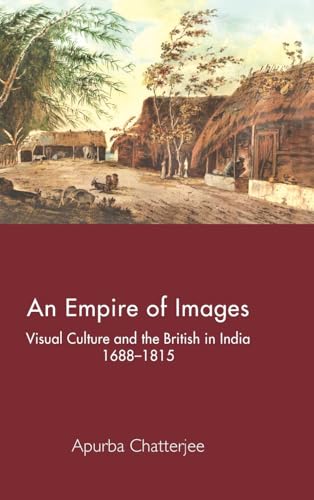
An Empire of Images : Visual Culture and the British in India, 1688–1815. / Apurba Chatterjee.
Material type: TextPublisher number: : Savera Book Distributors | : 4754 Akarshan Bhawan, 23 Ansari Road, Darya Ganj, New DelhiPublication details: , New York : Cambridge University Press , 2025.Description: xix, 360p. : 24cmISBN:
- 9781009567213
- 954.03 CHA
| Item type | Current library | Call number | Status | Barcode | |
|---|---|---|---|---|---|
 Books |
SNU LIBRARY | 954.03 CHA (Browse shelf(Opens below)) | Not For Loan | 31418 |
How did Britons come to see themselves as fit to govern India? An Empire of Images focuses on the visual arts as central to the making of political legitimacy during the long eighteenth century. Through images by both British and Indian artists, this book explores how peoples, landscapes, flora, and fauna in India became part of an imperial self-image. Torn between open triumphalism and anxious contingency, British artists and patrons sought to dissect India's mysteries and justify East India Company rule under the Crown. Meanwhile, Indian artists interpreted the realities of British hegemony in terms of both their native cultural resources and modes introduced by the colonizer. Tracing an emerging imperial ideology on canvas and in prints, as well as the pages of official archives and personal papers, this book offers new insights into reconfigurations of power in a period of European expansion in Asia. As Chatterjee argues, early colonial India became a site for contestation around British visual ascendancy, which must complicate our own understandings of honour, guilt, knowledge, and belonging.
There are no comments on this title.
