
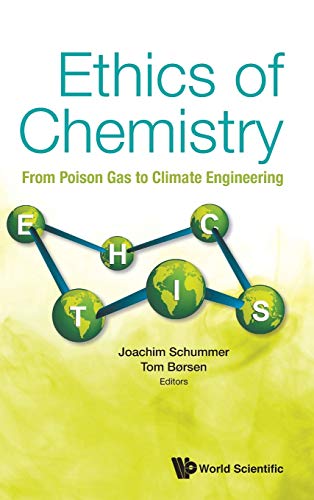
Ethics Of Chemistry : From Poison Gas to Climate Engineering / Joachim Schummer & Tom Borsen
Material type: TextPublisher number: ;Variety Books Publishers & Distributors | :B-10 Street No 2 West Vinod Nagar Delhi 110092 Publication details: Singapore : World Scientific Publishing Company, 2021.Description: vii, 559 pages 24cmISBN:
- 9789811233531
- 540.1 SCH
| Item type | Current library | Call number | Status | Notes | Barcode | |
|---|---|---|---|---|---|---|
 Costly Books |
SNU LIBRARY | 540.1 SCH (Browse shelf(Opens below)) | Not For Loan | Costly | 28028 |
Intro --
CONTENTS --
Introduction --
1. Ethics of Chemistry: Meeting a Teaching Need --
1. The Purpose of This Volume --
2. What Is Ethics? --
2.1 Ethics of chemistry versus 'ethics in chemistry' --
2.2 A brief introduction to philosophical ethics --
2.3 Applied Ethics: Top-down versus bottom-up --
3. Cases of Chemistry According to Ethical Topics --
3.1 Misuse and misconduct --
3.2 Unforeseen local consequences --
3.3 Global and long-term influences and challenges --
3.4 Challenging human culture --
3.5 Codes and regulations 4. Cases of Chemistry According to the Cultural History of Chemistry --
5. Cases of Chemistry According to Fields of Chemistry --
6. Conclusion: How to Use This Volume in Class --
Further Reading --
References --
Part I: Misuse and Misconduct --
2. The Case of the Finicky Reactions: A Case Study of Trust, Accountability, and Misconduct --
1. Introduction --
2. The Case of the Finicky Reactions --
3. Ethical Analysis of the Case --
4. Some Comparable Cases --
5. Conclusion --
Further Reading --
References --
3. Ethics of Chemical Weapons Research: Poison Gas in World War One --
1. Introduction 2. Historical Narrative --
2.1 The 'Great War' --
2.2 Chemical warfare in WWI --
2.3 Haber's academic-industrial-military-governmental complex --
2.4 Aftermath I: Chemical weapons deployments and international treaties --
2.5 Aftermath II: Post-war honors for chemical warfare scientists --
3. Ethical Analysis --
3.1 A brief introduction to ethics --
3.2 Ethical assessment of weapons research --
3.3.1. Utilitarianism --
3.3.2 Deontology --
3.3 Standard excuses by weapons researchers --
3.4 Ethical analysis of honoring warfare chemists --
4. Conclusion --
Further Reading --
References 4. Ethical Responsibilities in Military-Related Work: The Case of Napalm --
1. Introduction --
2. Ethical Responsibility in Military Research --
3. Just War Thinking --
4. Louis Fieser and the Firebombing of Cities --
4.1 Historical description --
4.2. Fieser's responsibility --
4.3 Ethical analysis --
5. The Dow Napalm Controversy --
5.1 Historical description --
5.2. Dow's responsibilities --
5.3 Ethical analysis --
6. Conclusions and Possible Lessons --
References --
Part II: Unforeseen Local Consequences 5. Corporate and Governmental Responsibilities for Preventing Chemical Disasters: Lessons from Bhopal --
1. Introduction --
2. Background --
2.1 The green revolution --
2.2 MIC and its properties --
3. The Accident and Its Causes --
3.1 The direct cause --
3.2 Deficient factory design --
3.3 Neglect of warning signals --
3.4 Contents of the gas cloud --
4. Effects of the Bhopal Accident --
4.1 Short term effects --
4.2 Long term health effects --
4.3 Socio-economic effects --
4.4 Compensation from Union Carbide --
4.5 Dismantling the plant --
5. Ethical Analysis --
5.1 Whose responsibility?
Although chemistry has been the target of numerous public moral debates for over a century, there is still no academic field of ethics of chemistry to develop an ethically balanced view of the discipline. And while ethics courses are increasingly demanded for science and engineering students in many countries, chemistry is still lagging behind because of a lack of appropriate teaching material. This volume fills both gaps by establishing the scope of ethics of chemistry and providing a cased-based approach to teaching, thereby also narrating a cultural history of chemistry. From poison gas in WWI to climate engineering of the future, this volume covers the most important historical cases of chemistry. It draws lesson from major disasters of the past, such as in Bhopal and Love Canal, or from thalidomide, Agent Orange, and DDT. It further introduces to ethical arguments pro and con by discussing issues about bisphenol-A, polyvinyl chloride, and rare earth elements; as well as of contested chemical projects such as human enhancement, the creation of artificial life, and patents on human DNA. Moreover, it illustrates chemical engagements in preventing hazards, from the prediction of ozone depletion, to Green Chemistry, and research in recycling, industrial substance substitution, and clean-up. Students also learn about codes of conduct and chemical regulations. An international team of experts narrate the historical cases and analyse their ethical dimensions. All cases are suitable for undergraduate teaching, either in classes of ethics, history of chemistry, or in chemistry classes proper"--Publisher's website.
There are no comments on this title.
