
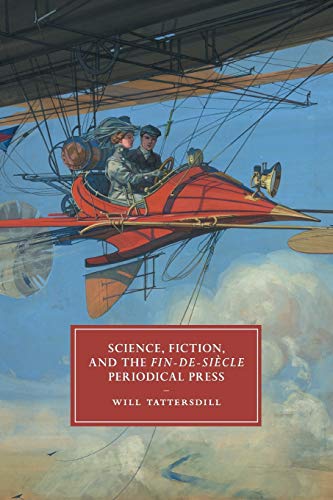
Science, fiction, and the fin-de-siècle periodical press /Will Tattersdill
Material type: TextPublisher number: :Atlantic Publishers & Distributors | :7/22 Ansari Road Darya Ganj New Delhi Series: Cambridge studies in nineteenth-century literature and culture, 105Publication details: New York . : Cambridge University Press, 2016Description: x, 220 pages : illustrations ; 24 cmISBN:
- 9781316507872
- Magazines, journals & serials
- Serials in English
- Wells, H. G. -- (Herbert George), -- 1866-1946 -- Criticism and interpretation
- Serialized fiction -- Great Britain -- History and criticism
- Wells, H. G. -- (Herbert George), -- 1866-1946
- Serialized fiction
- Roman
- Serialized fiction
- Wells, H. G. -- (Herbert George), -- 1866-1946 -- Criticism and interpretation
- Science-Fiction-Literatur
- Zeitschrift
- 052.09034 TAT
| Item type | Current library | Call number | Status | Barcode | |
|---|---|---|---|---|---|
 Books |
SNU LIBRARY | 052.09034 TAT (Browse shelf(Opens below)) | Available | 26494 |
Introduction: material entanglements --
1. Intrinsic intelligibility: communications with Mars, and between disciplines, in the pages of the magazines --
2. Distance over time: using periodicals to predict the future --
3. New photography: X-rays and the images of the New Journalism --
4. Further northward: polar exploration and empire in the fact and fiction of the popular press --
Conclusion: bad science and the study of English.
"In this revisionary study, Will Tattersdill argues against the reductive 'two cultures' model of intellectual discourse by exploring the cultural interactions between literature and science embodied in late nineteenth-century periodical literature, tracing the emergence of the new genre that would become known as 'science fiction'. He examines a range of fictional and non-fictional fin-de-siècle writing around distinct scientific themes: Martian communication, future prediction, X-rays, and polar exploration. Every chapter explores a major work of H.G. Wells, but also presents a wealth of exciting new material drawn from a variety of late Victorian periodicals. Arguing that the publications in which they appeared, as well as the stories themselves, played a crucial part in the development of science fiction, Tattersdill uses the form of the general interest magazine as a way of understanding the relationship between the arts and the sciences, and the creation of a new literary genre
There are no comments on this title.
