
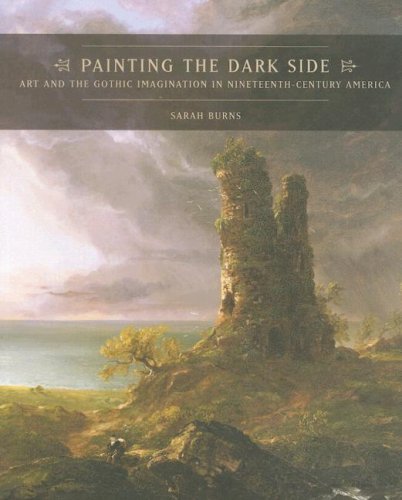
Painting the dark side : art and the Gothic imagination in nineteenth-century America. / Sarah Burns.
Material type: TextPublisher number: : Zafaa Books & Distributors | : 313/56F,Anand Nagar, Inderlok, Delhi-110035Publication details: , Berkeley : University of California Press , ©2004.Description: xxiii, 303 pages : illustrations (some color) ; 27 cmISBN:
- 9780520249875
- 759.130 BUR
| Item type | Current library | Call number | Status | Barcode | |
|---|---|---|---|---|---|
 Books |
SNU LIBRARY | 759.130 BUR (Browse shelf(Opens below)) | Not For Loan | 29246 |
Gloom and doom
The underground man
The shrouded past
The deepest dark
The shadow's curse
Mental monsters
Corrosive sight
Dirty pictures
"Voices from the dark or "gothic" side of American life are well known through the work of writers such as Edgar Allan Poe, Nathaniel Hawthorne, and Herman Melville. But who were the Poes of American art? Until now, art historians have for the most part seen the gothic as the province of misfits and oddballs who rejected the bright landscapes of the Hudson River School and the cheerful scenes of everyday life depicted by popular genre painters. In Painting the Dark Side, Sarah Burns counters this view, arguing that the gothic, far from being marginal, was pervasive, giving artists - recognized masters and eccentric outsiders alike - a potent visual language to express the darker facets of history and the psyche. A deep gothic strain in the visual arts becomes evident in these beautifully written, richly illustrated pages, illuminating the entire spectrum of American art." "Weaving a complex tapestry of biography, psychology, and history, Sarah Burns reveals nineteenth-century American painting as a haunted ground of personal demons, racial fears, and pathologies of mind and body. She exposes dark dimensions in the work of both romantic artists such as Albert Pinkham Ryder and Thomas Cole and realists like Thomas Eakins and argues persuasively that works by artists such as John Quidor, David Gilmour Blythe, and William Rimmer, generally considered outsiders, belong to the mainstream of American art. She explores the borderlands where popular visual culture mingled with the elite medium of oil and delves into such topics as slave revolt, drugs, grave-robbing, vivisection, drunkenness, female monstrosity and family secrets. Cutting deep across the grain of standard nationalistic accounts of nineteenth-century art, Painting the Dark Side provides a thrilling, radically alternative vision of American art and visual culture."
There are no comments on this title.
